

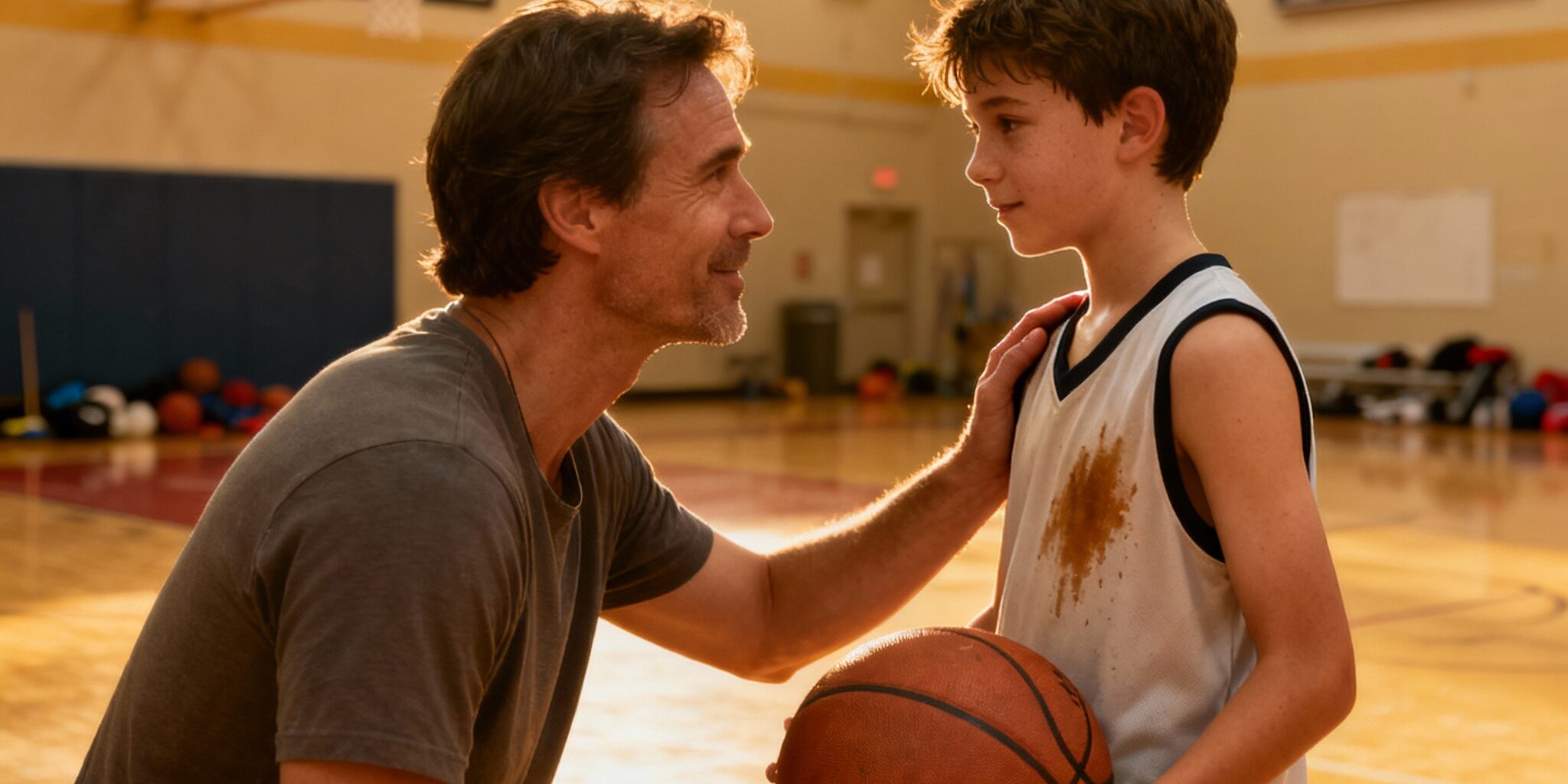
CHALLENGE:
After your athlete’s next game—win, lose, or worse—open your postgame conversation with gratitude.
Something as simple as:
“Man, I just love watching you compete and play a sport you love. I’m really grateful I got to be here today.”
Here’s the part that surprises most parents:
That one sentence doesn’t just change your athlete… it changes you first.
Research in sports psychology and positive psychology consistently shows that gratitude lowers stress and helps regulate emotions. It shifts your brain out of “evaluation mode” (what went wrong, what needs fixed) and into “connection mode.” When that happens, your tone softens, your body language changes, and your athlete feels it immediately.
And athletes—especially kids and teens—are incredibly sensitive to tone.
Now flip it to your athlete’s side.
After a game, their brain is already processing:
- Did I play well?
- Did I let my team down?
- Are my parents proud of me?
Studies on youth athletes show that perceived parental pressure is one of the biggest contributors to anxiety, burnout, and even quitting sports altogether. Not because parents are trying to be intense—but because postgame conversations often feel like evaluations.
Even when we mean well.
That’s where gratitude becomes powerful.
When you lead with appreciation instead of analysis, you do two things:
1. You lower their defenses
They’re no longer bracing for critique. You’ve just told them:
“I enjoy YOU—not just your performance.”
2. You create a safe runway for real conversation
Now they can actually show you what they need:
- Sometimes it’s support
- Sometimes it’s laughter
- Sometimes it is feedback and breakdown
But now it’s invited… not forced.
There’s also a long-term play here.
Athletes who feel supported rather than evaluated:
- Stay in sports longer
- Develop more internal motivation
- Build stronger confidence and resilience
In other words—they don’t just perform better… they become healthier competitors.
So here’s the challenge again:
Next game, before you say anything about stats, mistakes, or coaching decisions…
Start with gratitude.
Then pause.
Let them lead you to the conversation they actually need.
Because at the end of the day, we’re not just raising athletes.
We’re raising young men and women who are learning:
- How to handle pressure
- How to deal with failure
- How to believe in themselves
And sometimes the most powerful coaching they get… has little to do with the game at all.